Posts

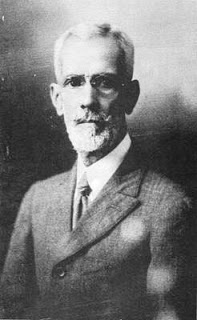
Trinidad H. Pardo de Tavera - Deserves a Second Look?
Image
      Trinidad Hermenegildo Pardo de  Tavera y Gorricho (1857-1925). Filipino physician and historian. An outstanding Filipinologist who wrote notable scholarly works in various fields of Oriental and Philippine studies; language, anthropology, folklore, etc. His training and qualification as a doctor are immense. T T. H Pardo de Tavera received his licentiate in medicine at the Fa culté de Médecine de Paris and his bachelor in medicine also in the same institution. In the mid-1880s, he enrolled in École nationale des langues orientales vivantes (now Institut national des langues et civilisations orientales) and took courses under Pierre Étienne Lazare Favre. In December 1885, he received his diploma in the Malay language.  One of Pardo de Tavera's book 'Plantas Medicinales de Filipinas' is an outstanding study on the different medicinal plants of the country. But as a politician, history seems to be unkind to T.H Pardo de Tavera. Perhaps he always went to the w...

My Remembrance of Quijano de Manila

Image
Well, let me tell you this; there's so many things written or people writing about him: some, too fancy or academical, some really quite a bore. Let me get it straight...He likes Cole Porter, practically anything that is Porter. Right from the first bar, he'll start swinging his hands like a maestro conducting a big band. Now, why do I know that? Well, I should know...I played in front of him many times, and I love the way he asked for his favorite tune...He'll raise one hand to catch your attention, points his finger at you, and will quickly say....."Cole Porter!" Now that is style.... the man simply got it. I never approached him, and he never came near us. But when he is in the hotel lobby, he would gaze around to find me. Then that great nod. I knew then my evening would be a swing. No! When he's there, I won't start my set with his Porter. No...no. I will wait for him to tell me. He has his rituals. He must have his San Mig first. He must have ...

Jose Corazon de Jesus- "Ang Manok Kong Bulik"

Image
Remembering One Favorite Tagalog Poem Early 1900 Philippine postcard. the ever popular "Sabong" Ang Manok Kong Bulik   ni Jose Corazon de Jesus Linggo ng umaga. Ang nayo'y tahimik, ang maraming dampa'y naro't nakapinid liban na sa ibong maagang umawit ay wala ka man lang marinig sa bukid... Di-kaginsaginsa'y aking naulinig ang pagtitilaok ng manok kong bulik, ako'y napabangon at aking naisip: Pintakasi ngayon! May sabong sa Pasig! Gadali pa halos ang taas ng Araw sa likod ng gintong bundok ng Silangan ay kinuha ko na sa kanyang kulungan ang manok kong bulik na sadyang panlaban... Kay-kisig na bulik! At aking hinusay bawa't balahibong nasira ang hanay, ang palong ay aking hinimas ng laway, binughan ng aso nang upang tumapang! Muling nagtilaok nang napakahaba at saka gumiri nang lalong magara, kumkukutok-kutok pa't kumahig sa lupa, napalatak ako nang hindi kawasa... Ang aking puhunang sampung piso yata'y ...

Revisiting The Bow Wow Fest- St. Louis Expo 1904

Image
The Igorots gained the label "dog eaters" on a global stage when a group of them was presented in a pavilion at the 1904 St. Louis Exposition in Missouri. In a spectacle resembling a giant terrarium, visitors were treated to the live demonstration of dog butchering and dog eating. Some imaginative American writers would later refer to this dog-eating display as the "Bow-Wow Fest." While there were protests from some sectors of the American public, there were also show entrepreneurs who were determined to keep the spectacle going and went to great lengths to supply the Igorots with live dogs. There is also an urban legend suggesting that the famous American food, sausage in a bun, was influenced by what happened in the Philippine pavilion at the St. Louis Expo. Dog eating became a novelty, and enterprising individuals began calling their frankfurter and wienerli in a bun "hotdogs." The "bow-wow" fest was such a significant draw in St. Louis that s...

Jose Rizal And The Malay World

Image
Rizal-The foremost Malay? Pride of the Malay Race? Interestingly, Rizal's ancestry was a diverse blend of different ethnicities. On his father's side, one of his ancestors was a Chinese immigrant from Fujian province, while his mother was said to be a descendant of the pre-Hispanic Tagalog-Malay nobility of Manila, specifically the Lakandula line. Some biographers even mention that Rizal had Spanish ancestry. The Spaniards commonly referred to the native inhabitants of the Philippines as "Indios," classifying them as belonging to the "Malayo" (Malay) race. Many Spaniards viewed the "Indios" as primitive and indolent. Some went so far as to liken the native population to the Dayaks of Borneo, whom they often characterized as savages. In the final hours before his execution, Rizal was asked to sign the notification of his sentence. Upon reviewing the document, he requested a correction, insisting that he had been incorrectly described as a C...