Posts

In Search of the "Venice Spice Trade"

Image
The recent flooding in Venice brought to mind a remark from an Italian academic friend of mine years ago while we were exploring the city: "Venezia has long been dead. All you see now are just remnants of her glorious past. It's like gazing at the well-preserved body of a beautiful lady. Just be cautious not to fall in love with her!" Nevertheless, many do fall under the enchantment of Venezia. For years, I've been intrigued by this "well-preserved body," once known as the Mistress of the Adriatic. During its zenith as a city-state, from the late Middle Ages through the Renaissance, Venice served as a hub for both exotic and opulent trade originating from the East. With a watchful eye on the Ottoman Turks, a threat that loomed like the sword of Damocles, Venice actually thrived in those years of "mutual tolerance." The city's interactions and trade with the East hinged on a delicate balance, with her influential neighbor's magnanimity en...
Magellan Is No Hero

Image
I was recently asked by a colleague about my opinion on the controversy created by the Spanish production of an animated movie "Elcano and Magellan," where native islanders of Mactan led by Lapu Lapu are depicted as villains, the "kontrabida" and Magellan with his men, of course, the "bida." Others even claim the film is overly romanticizing the so-called 500th  anniversary of the first rounding of the globe and also somehow glorifying both Magellan and Elcano. The truth is, while the film's English title seems to be unifying both men, there is right now this debate in the Iberian Peninsula about who really gets the accolade being the first to circumnavigate the world. Portugal and much of global opinions are behind Magellan, while Spain continues to insist Juan Sebastian de Elcano. Hero? Magellan is not a hero. But we can consider him as one of those pioneers, possessing such tenacity navigating the uncharted waters. "Flawed" is perhaps...

Feast for the Hegelians

Image
I still keep this book although lately, events seem to be implying that we should throw it to the garbage can -- This now tattered pocketbook version of what was considered in the early 1990s as a bestseller in the contemporary study of philosophy and history.  The book raised some eyebrows but was selling briskly days after it hit the bookstands. The author, Francis Fukuyama, was seen in  many popular talk shows in the US discussing his work. I still recall I was on a train to Strasbourg coming from the Alps in the spring of '93 when I first got hold of the book. The world then was mighty different. Almost three decades later, I can understand why Fukuyama could be in a state of denial or perhaps to the point of rewriting or even repudiating many of what he had written as events in the worlds unfold, as we see now the re-emergence of Populism in the US, the Philippines, Turkey, Brazil, Chile, etc.-- countries that championed the cause of liberal democracy before. Thirty ye...

"Caloys" instead of "Pinoys"

Image
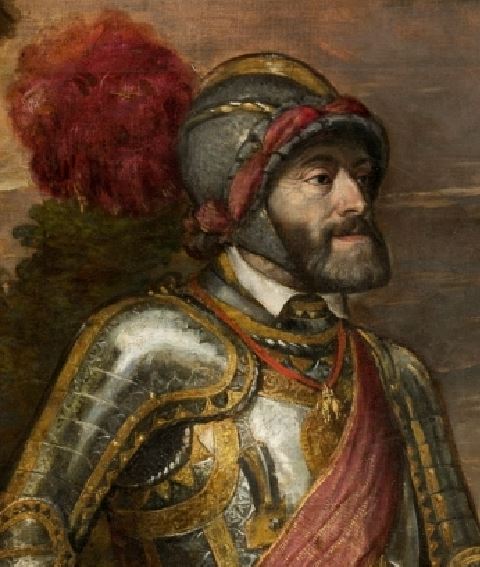
Equestrian portrait of Charles V or Carlos I of Spain (detail) by Titian. It is somewhat ironic that one crucial figure in our history, the man who coined the term "Las Islas Filipinas," remains obscure in our narratives. Besides commanding the ill-fated expedition named after him, we know not much about Ruy Lopez de Villalobos. When Villalobos landed on the Samar - Leyte area in 1543, he named these groups of islands, "Las Islas Filipinas" in honor of the then Habsburg Prince Philip (the future Philip II of Spain). Little did he knew that the said term will be used to define and classify the archipelago, which is now known as the Philippines. Now, why did it happen? The answers could be pointed towards map makers and printers in the age of exploration, who upon reading official chronicles jotted down and printed the names of islands and places etc. which could either be easily pronounced and remembered. Villalobos' island naming did not end there, up...

Antonio Pigafetta's Animalia

Image
Strange sea creatures attacking a galleon from Olaus Magnus Map --1539 Carta Marina Many 16th-century maps of the oceans teemed with fantastical figures and tales of monstrous creatures. The prevailing mindset of the era remained shackled by the superstitions and legends of the Middle Ages, struggling to embrace a more scientific worldview. Antonio Pigafetta's chronicles of Ferdinand Magellan's voyage, however, included fascinating zoological entries documenting creatures that were still largely unknown to Europeans. While traversing the equator in October-November 1519, en route to the Americas, Pigafetta encountered a marvel of the deep: "During the calm, large fish called 'Tiburoni' (sharks) approached the ships. These formidable creatures possess teeth capable of inflicting horrific wounds, and they readily devour any unfortunate soul who falls overboard, dead or alive. The sailors employed iron hooks, known as 'hamc,' to capture these bea...

Memories of Martial Law

Image
If you go out to buy something at that time, people will always insist that your money: "Dapat may tatak ng Bagong Lipunan." Imagine that, the Marcos ideology, his envisioned new society seen in the most widely circulated object, nothing else but banknotes. The battle to win the minds of the people cleverly executed? Once in an afternoon, there was a commotion in the outski rt of our barrio; young people were shouting, "Nariyan na ang PC!" True enough, elements of the constabulary started rounding up young males with long hair. Ginupitan lahat ng long hair. The word curfew became a dreaded term because once caught in the forbidden hour of the night, you'll inevitably spend the rest of it in the precinto. And in the morning when you wake up behind bars, you'll probably hear the morning radio or even TV with the "Bagong Lipunan March." It was so monotonous and repetitive that up to now, the lyrics are still in my head. Law and government becam...

Magellan's Jerez

Image
I have imagined the cargo of wine carried by the so-called "Armada de Maluco" of Ferdinand Magellan in his voyage to the Spice Islands. According to the Seville archives, the armada of 5 ships was loaded with 508 butts of wine from Jerez de la Frontera. One butt is approximately 60 to 80 gallons. Could we equate one butt to middle size barrels? Yes, it is possible.  So we can imagine that each ship could have carried close to ten barrels, some even more. People would wonder, perhaps, if it was a happy trip after all. Never. In the 270 men that started the journey, only 18 were able to return to Europe. Precisely 500 years ago today, Magellan's armada left the port of SanlĂșcar de Barrameda heading towards the Canary Islands (Islas Canarias).