Posts

Jose Rizal and Medical Marijuana

Image
Facsimile addressed letter  to Dr. Adolf  B. Meyer  Today is the 158th Birthday of Jose Rizal. I am featuring one of his controversial letters. Dated March 5, 1890, and addressed to German naturalist and anthropologist Adolf B. Meyer. Yes, it is the one where Rizal mentioned, he experimented with "Hashish"-- a byproduct of the Cannabis plant (or in slang, "marijuana")... Tumira siya. The three-page letter was actua lly written in Spanish and not in German as some earlier articles say. Rizal communicated with the Hamburg born Prof. Meyer in three languages, namely German, French, and also Spanish. Translating the first two paragraphs, it goes: "My distinguished friend: “I received your letter of the 27th of last month and excuse me for not having answered you before this, for I have had to consult some countrymen and books concerning your question about the hashish. “No book, no historian that I know of speaks of any plant whose use is similar to that of...

Latent Symbols of Our Republic

Image
Revolutionary postage stamp- Aguinaldo- 1898-1899 The equilateral triangle is associated with freemasonry. The three corners adorned each with a star -- It stands for the trinitarian view of existence, found in some great philosophies and religions of the world. That three stars also define unity of three characters, in one: Luzon, Visayas, Mindanao, comprising the  whole Philippines. Or the great tripartite motto of the French Revolution (which Aguinaldo often invoked) - Liberté, égalité, fraternité. The freemasonry's "eye of providence" is replaced with the mythological sun. All these symbols lead us to one great movement and philosophy that swept Europe in the 18th Century -- the Age of Enlightenment. It is thru this thinking, of reason above belief, logic, and freedom of men above institutions like the church, etc, that revolutions were born. Enlightenment spread throughout Europe. In Spain and in its dominions in the Americas, it was called "Ilustracion...

Ancient Lores of "Pintakasi"

Image
Sabungero, 19th Century Print - BNP On earth, as it is in heaven" — Could cockfighting transcend the earthly realm? Even President Duterte once questioned his own religious understanding: “: “Hindi ko talaga maintindihan ‘yang relihiyon ko. Si San Pedro, naka-guwardiya sa gate sa langit. Tapos ang gago nagdala pa ng manok. Wala namang sabong doon! Bakit? Hindi ko maintindihan itong bugok na itong San Pedro na ito" (I really can't fathom my religion, Saint. Peter he's guarding the gates of heaven. Then the fool brings a rooster. There's no cockfighting there! why? I can't comprehend this stupid St. Peter.) Did Duterte perhaps miss the essence? The art of manly Filipino bird combat is, in itself, a form of religion. "Pintakasi" falls on a Sunday. Some men first pass by the church before heading to the cockpit. Are they praying to their Pintakasi (Patron Saint) or seeking blessings for the Pintakasi (the Cockfight), concepts lost in translation? ...

High Roads to Colonial Art - "Escuela Cuzqueña" Influence in the Philippines

Image
One of the wood panel paintings -"San Cristobal" in Paete Church, Laguna. By Jose Luciano Dans (1805 - 1870) Wiki One curious cargo of the "Nao de China" or the trading galleons of the Manila-Acapulco trade route in the early 17th century were objects for the propagation of the Christian faith - religious artworks. These artworks held great importance for religious orders, and any duties associated with their transport were waived due to their significance. The markets and ports of Nueva España were flooded with both merchants and copiers of religious art. A prevailing artistic norm or style existed in the Americas, and its origin was high in the Andes Mountains, in the former Inca capital of Cusco, Peru. This Catholic religious artistic tradition came to be known as the "Escuela Cuzqueña" (The Cuzco School). In the early years of evangelization in the Americas, the art of painting religious themes also flourished in the high Andes. Baroque art, wi...

"Patatas kaysa Sosyalismo!"

Image
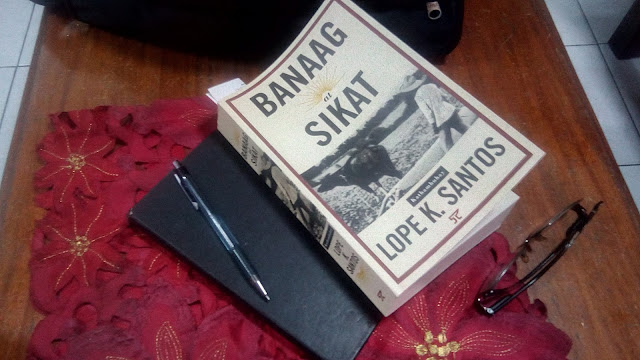
Tatlong gabi ko ng binubuno ang mga unang kabanata ng obra ni Lope K. Santos. Kahapon pa sana tumitiklop ang aking diwa. Danga nga lamang kundi sa isang hamon at sa kakaibang paksa nito, palagay ko ay hindi ko na itinuloy ito. May nagsabi, nagiging todo sopistikado ang tao kapag niyakap na niya ang paniniwala sa pakikbakang sama sama -- Kolektibong aksyon laban sa mga sumisiil sa kalayaan. Kadala san nariyan daw ang sining, ang literatura o panitikan upang maghayag. Subalit nagtatanong ako, nararating ba nito ang lahat, nauunawaan ba naman ito? Kapag wala ng pumansin o wala ng sumunod, saan ito napupunta? Naalala ko tuloy ang noo'y nag-uulyanin ng pilosopong Pranses na si Jean Paul Sartre , ang dakilang guro ng 'Existensialismo", na hinayaan ang sarili at ang pilosopiya niyang tinaguyod na lumihis patungo sa "komunismo"-- ang sinasabi nyang solusyon. Kaya hayun binansagan siya, matandang nakapinid sa torreng komunista. Subalit magtatanong muli ako: Ano ba ang...

Franz Liszt - Letter to Heinrich Brockhaus

Image
Franz Liszt (1811-1886) Franz Liszt - Letter to Heinrich Brockhaus -- Bookseller in Leipzig. On the issue of erroneous titles, false attributions and hyped up diplomas: My dear Mr. Brockhaus, In thanking you for your kind mention of the notice of the inclusion of my name in the Conversations Lexikon, I wish above all things not to go beyond the limits of most scrupulous delicacy, which in these sorts of things have alwa ys appeared to me all the more desirable to maintain because they are so very often passed. Consequently, I will only allow myself to point out three misstatements of fact in the article about myself: firstly, my supposed title of ex-St. Simonien; secondly, my supposed journey to America; thirdly, my diploma of the University of Konigsberg, which my biographer arbitrarily changes into a diploma of Doctor of Music, which was not the one given to me. I have never had the honor of belonging to the association, or, to put it better, to the religious and political...

Filipino Brass Band Sa Korte Ng Hari Ng Cambodia (ca. 1880's)

Image
Kagabi habang nagbabasa ng ilang artikulo at tala ng mga siyentipiko at politikong Europeo na bumisita sa Asya noong ika XIX Siglo, nasumpungan ko ang isang talata sa libro ng isang kawani ng French "Ministère de l'Instruction publique" (Katumbas ngayon ng Ministry of Education) na si Mon. Edmund Cotteau. Ang libro ay patungkol sa kany ang biyahe sa Indochina taong 1881-1882. Binanggit ni Cotteau ang selebrasyon nangyari sa kaniyang sinasakyang barko patungo ng Angkor. (Ang biyahe ay sponsor mismo ng hari ng Cambodia). At sa pagdaong nito kasabay ang mga fireworks o pailaw, narinig naman ang pagbati at pagsigaw "Vive le roi!" ng mga marinong Franses at "Vive la Republique!" naman ang tugon ng mga sundalo at mamayang Cambodian. Sinabayan naman ito ng pagtutog ng isang brass band ng mga Pilipinong nagsisilbi sa hari. Musika at selebrasyong tila dumaig sa indak at titik ng "La Marseillaise". Sa ilalim ng talata, may insinulat na anotasyon an...