Posts

So Much for "Komiks"

Image
 French comic series called "Vigor", published by Artima (France).  Last weekend, I spent two quiet evenings with my boys watching the Netflix anime series “Trese”. We finished all six episodes but now and then I have to do some explanation as the boys wanted more backgrounders on the featured Filipino mythological creatures. Once my youngest had to click the “pause” button laughing at me and saying how my explanation had become too academic ( way too “Austronesian” perhaps) especially when I mentioned the connection of the “Tianak” to the Malay folklore “pontianak”. In the end, they had to calm me down: “Dad manood ka na lang” The Netflix anime series reminded me of the art of "komiks" and the culture it spawned in the Filipino consciousness. Somehow I recall my elementary days when you have to fight your way in a group of classmates who were crowding around reading a DC Comics. We used to do science experiments at school with the aide of comic strips. I still reme...
The Forgotten Duck Industry of Pasig

Image
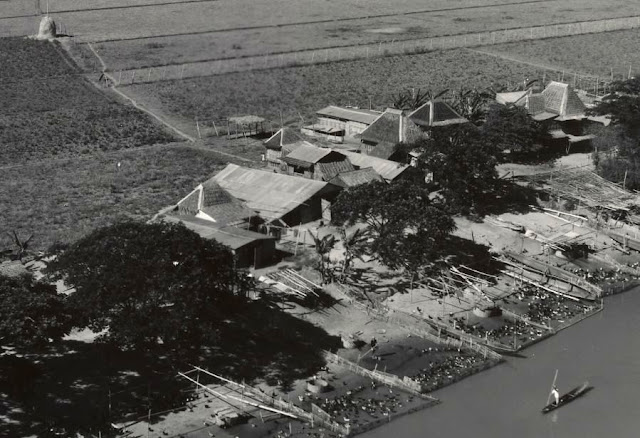
Not many Pasiguenos  still remember the once vibrant duck industry of Pasig. Perhaps others,  like the younger generation, don't even have an idea about it. In a distinct time, when much of the town then was agrarian, duck raising and the production of duck eggs were a source of livelihood for several families of Pasig. In the early 1980s, the industry began to wane, until it was all but gone in the 1990s.  Pasig duck farms along the Pasig River. The enclosures "puyahan" were located along the river banks. The ideal environment for the domesticated duck to produce eggs. Early Spanish chronicles discuss the different customs, traditions, and way of life of the natives of our islands -- Duck raising was mentioned as one unique industry which many agriculture and animal husbandry scholars also believe, was brought by the Chinese many years before the hispanization of the Philippines. One extensive description of the duck industry in the Pasig River during the Spanish times w...

Breakfast and Remembrance: The Writer As Monster

Image
  I recall the works of Ignazio Silone — Last night I was going through my old files and found the notes I have taken in a lecture about exiled writers in Zurich. They were somehow accommodated by Swiss writers two of which were giants: Duerrenmatt and Frisch. It was through old newspaper and magazine interviews of the two that I came across Silone. That was in the 1990s. Silone the anti-fascist then anti-communist, anti-Stalinist — He was an attractive study in that distinct time when totalitarianism of the right and the left were being revoked. Funny, but I even went to visit the cafés and restaurants where Silone and the likes of Frisch or Duerrenmatt frequented if only to fill the gaps brought by questions that will never be answered. Suddenly, news detailing Silone's early collaboration with the Fascist regime of Mussolini came to light. Then followed by more revelations about his relationship with the American intelligence (OSS- precursor of the CIA). The writer a political m...

Vaccination -- That Holy Cow

Image
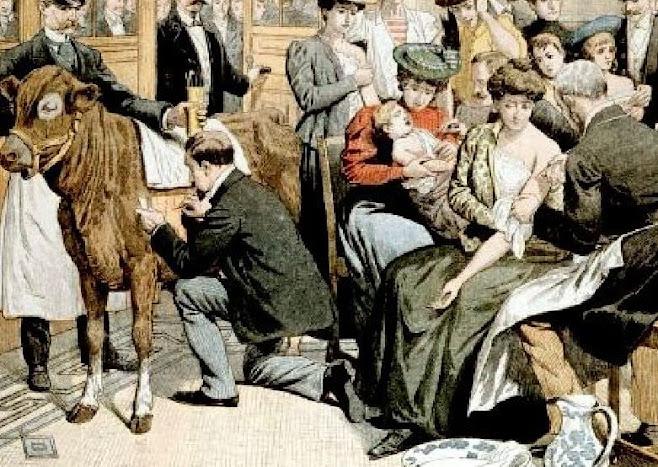
  In India where the number of Covid-19 cases rose in the last months, it was reported that certain people started smearing themselves with cow dung and urine. They believe it will boost their immunity, the cow being sacred in the Hindu religion, revered and protected -- The symbol of life itself. Of course, Indian doctors quickly discouraged what they label as outrageous. I am reminded of another Bovine incident two centuries ago that of an English doctor named Edward Jenner, who came up with the idea of introducing the virus of Cowpox (Variolae vaccinae) to the human body in order for it to develop antibodies against the said skin disease, seen first in cows and to other related pathogens such as deadly smallpox. "Vacca" is the Latin term for cow, obviously where we also get the Tagalog "baka", as influenced by Spanish which in turn was brought about by the maternal role of the Latin language to many European tongues. Thus Jenner's method we also know now as: ...

The Cebu Massacre 1521 – The Rape and Jealousy Angle

Image
The first question that comes to mind is: Why did Humabon and the Cebuanos plot against Magellan’s crew—their supposed allies? It had not even been a week since Magellan fell at the hands of Mactan warriors under Lapulapu, yet suddenly, their foremost friends—and somehow also benefactors—the Cebuanos, turned against them. It was actually the Austrian writer and Magellan biographer Stefan Zweig (1881–1942) who was among the first to explore the angle of rape and abuse of Cebuano women as a trigger for the Cebuanos’ anger, which subsequently led to the massacre. Zweig cited as his primary source Martin of Genoa, a survivor of the expedition, who claimed: “Violation of women was the main trouble.” Zweig elaborated: “Despite his best endeavors, Magellan had been unable to prevent his men—sex-hungry after so long a voyage—from raping the wives of their hosts; vainly did he try to put an end to these acts of violence and lubricity, even punishing his own brother-in-law, Duarte de Barbosa, fo...

The Quixotic Magellan -- The Battle of Mactan

Image
Ferdinand Magellan by Charles Legrand (Biblioteca Nacional de Portugal) I n one aula discussion, I was asked to describe Spain's "Siglo de Oro" -- Spain's golden age. I mentioned the achievements in arts and letters and of course the great age of discovery that of Magellan et al. There is also Cervantes and the romantic idea of chivalry being reawaken into the said "Siglo". Being a musician, I also spoke about Spanish music of that time, particularly the character of the early "rasgueado" which I describe as different patterns of strumming the guitar (vihuela) that somehow imitates the galloping of horses. Yes, the quixotic character of the time of medieval knights and adventures, Zeitgeist, could even be deciphered in their music. The men like Magellan were knights or horsemen in a romantic quest for glory and gold (and greed) with their converted horses fashioned out of wood-- Galleons that sailed and ventured upon seas, coming like a Trojan h...

Lapulapu -- A Reminder of Different Heroes

Image
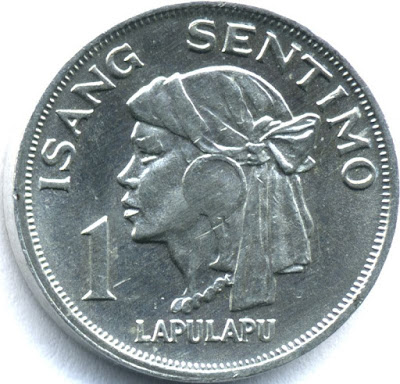
The one centavo coin was probably my generation's first knowledge of Lapu Lapu and also the long-lasting image about him that still remains in many of us. Besides that, he is still the obscure hero of a nation which incidentally was not yet in existence during the battle of Mactan. So whatever he and his men fought for, they fought it above all for themselves. But is there something about the historical Lapulapu that we Filipinos should always mention? I think there is -- I believe the Battle of Mactan was a blow to European claims and pretensions in the 16th Century, in a region they thought they have exclusive rights. This could be blasphemy to some but I am in the opinion that the foremost role of History and historians in bringing out facts is also to give justice to those people, natives like those who greatly suffered under the yoke of European colonization--Lest we forget that their glowing stories of exploration, circumnavigation, and colonization were also achieved at the ...