Posts

Jose Rizal's Cartoon and Potato Humor
Image
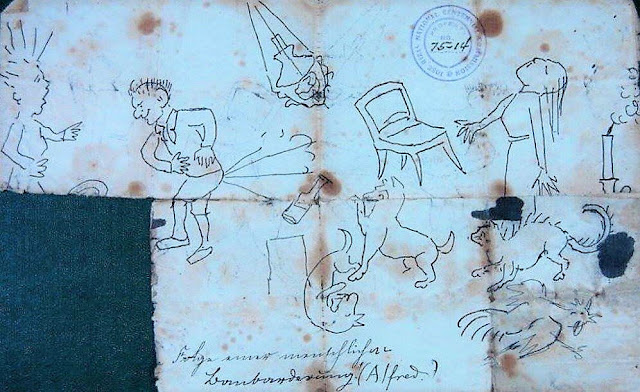
  In his letter to his family, dated 6. February 1886 from Heidelberg, Germany, Jose Rizal describes German life to his family rather candidly: "La vida alemana no es desagradable, solo que está llena de patatas. A cualquier cosa, patatas: por la mañana y por la noche. A la noche se toma té con patatas y carne fría.. Translation: "German life is not unpleasant, it is just full of potatoes. To anything, potatoes: in the morning and at the night. At night tea is taken with potatoes and cold meat." Incidentally, there is one cartoon drawn by Rizal when he was in Germany describing the consequences of an early morning farting of a man named Alfred. Incredibly our national hero used the German term "Bombardierung"(Bombardment) to put the utmost humor into the cartoon where the scene was of funny chaos. Perhaps the result of too many potatoes? By the way, the German word for potato is "Kartoffel". In Swiss-German it is much more fanciful, they call it ...

Medieval Saints Spain Brought to the Philippines

Image
  The Martyrdom Of Saint Sebastian. ca 1472. Staatliche Sammlung. Munich The Waning of the Old Gods and the Rise of the Saints It took millennia for Christianity to supplant the polytheistic Graeco-Roman religion across most of Western Europe. This new faith placed humanity at the center of the cosmos, with a single God intimately connected to human suffering – Jesus Christ, the incarnate son of God, as one branch of the new religion proclaimed. However, this new faith harbored its own form of demigod veneration. Many came to revere "saints," individuals believed to possess divine powers who inspired action, healing, and conversion in the name of Christ. While some saints were early martyrs or key figures in the church's growth, others bore a striking resemblance to the demigods of the Graeco-Roman pantheon. Similar to the ancient Greek city-states, communities and cities throughout Europe venerated saints as patron protectors and benefactors, much like the way Greek myth...

Ang Militarismong Kastila na Bumitay Kay Jose Rizal

Image
  Ang Bilango ng Intramuros --  Bisperas ng Pasko Disyembre 1896 Ika-22 ng Disyembre 1896, ipinalabas ng opisina ng Gobernador General ang ulat na nag dedetalye patungkol sa aktibidades at nakaraan ng bilangong Jose Rizal. Ang ulat ay isinumite naman sa korteng naglilitis sa akusado. Sa nasabing ulat, kapansin-pansin na hindi lamang ang obrang "Noli Me Tangere" at "El Filibusterismo" ang binangit bilang mga pangunahing panulat na ginamit ng nasasakdal upang libakin ang mga prayle at ang pangkalahatang estado ng gobyerno kolonyal ng Espanya sa Piipinas, maging ang kanyang anotasyon sa "Sucesos de las Islas Filipinas" ( ni Antonio Morga) ay sinasabing naghahayag ng mga prinsipyong laban sa simbahang katolika. Nag uudyok sa mamamayan upang mag aklas. Sa bisperas ng Pasko 1896, inilabas din ng Malacanang noon ang mga pangalan ng mga opisyales militar na aaktong bilang mga hukom sa salang sedisyon at rebelyon laban kay Rizal -- mga pangalang na nagmula sa ibat ...

Noli Me Tangere's "Christmas Eve"

Image
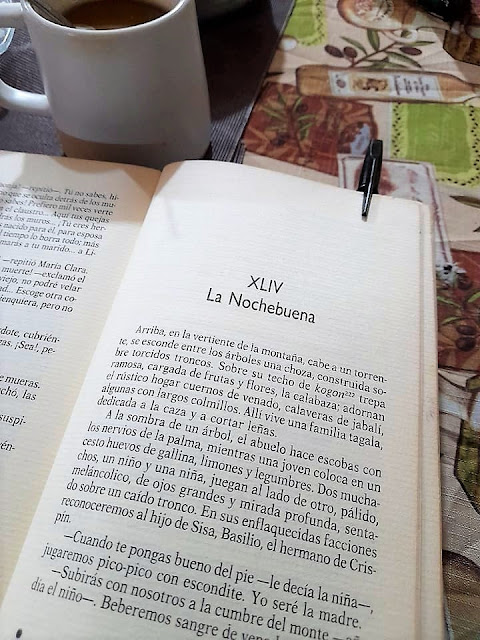
Breakfast And Remembrance. Pasig City. 24. December 2021   Last night, we found ourselves watching a pirated version of the latest Spider-Man movie, No Way Home (sorry, couldn't wait). As the movie wrapped up, the final scenes unfolded with the hero frolicking in the snow—Christmas had come. It struck me: how many unforgettable stories and movies have been set during this magical season? One of the first that comes to mind is Charles Dickens’ timeless tale of the rich yet miserly Ebenezer Scrooge in A Christmas Carol. There’s also E.T.A. Hoffmann's The Nutcracker and the Mouse King, immortalized by Peter Ilyich Tchaikovsky in his ballet The Nutcracker Suite. During high school, we read O. Henry’s short stories, and The Gift of the Magi always stood out as a favorite.  There are movies and stories we often would like to associate with this great time of the year. Jose Rizal has the last chapters of the Noli set in Christmastime, but what Rizal did was to make it quasi tragic, s...

9736 - Jose Rizal's Lotto Winning Number

Image
  Our lotto aficionado of 1892 bought a kind of lotto ticket similar to this -- the Spanish lottery in the Philippines. He won second prize. I just superimposed the real winning number combination 9736. Perhaps this was how it looks like. And yet I still feel one number is missing. The winner was actually not a freeman that time. He was exiled to a coastal barrio in Dapitan, Mindanao guarded by colonial authorities. The ticket actually won P20,000 (Quite a lot during that time). It is said, that Jose Rizal had to share it with his jailer Captain Ricardo Canicero who happened to own half of the ticket. With the P6,000 price money, he bought some hectares of land, enough to allow him to live a life of quiet and prosperous isolation. I wonder what numerologists would have come up with if the rest of the story says, the winner ended up losing everything. What is this ancient lore of numbers that "mystic" like him has a way of manipulating it for their advantage? Pasig City Decemb...

MOTHERS OF SPARTA

Image
Excerpts From Jose Rizal's "Letter to the Young Women of Malolos." "When a mother handed the shield to her son as he was marching to battle, she said nothing to him but this: “Return with it, or on it,” which meant, come back victorious or dead, because it was customary with the routed warrior to throw away his shield, while the dead warrior was carried home on his shield. A mother received word that her son had been killed in battle and the army routed. She did not say a word but expressed her thankfulness that her son had been saved from disgrace. However, when her son returned alive, the mother put on mourning. One of the mothers who went out to meet the warriors returning from battle was told by one that her three sons had fallen. I do not ask you that, said the mother, but whether we have been victorious or not. We have been victorious – answered the warrior. If that is so, then let us thank God, and she went to the temple." "A Spartan Woman Giving...

Bolkiah "Nakhoda Ragam" -- Conqueror of Maynila?

Image
The photo highlights the tomb of Sultan Bolkiah, the 5th Sultan of Brunei, who reigned, 1485-1524. He was also believed to be the legendary Malay figure known as "Nahkoda Ragam" (the Captain of the ship). Perhaps a form of reverence to him who extended the sultanate's territories and influence beyond Borneo. Much of the early history of Brunei and its ruler are still shrouded in obscurity. The Brunei "Silah-Silah" (Tarsilah) would have only mentioned names and figures of rulers, often leaving their marks and even achievements in speculations-- Its Historiography, wanting. Borneo came to the direct interest of the Portuguese, after their conquest of Melaka in 1511. Incredibly, the Luções merchants (natives of Luzon) living in Melaka, who sail to Brunei to do trade, were mentioned by the Portuguese Captain General of Melaka Rui de Brito Patalim in a letter to Alfonso de Albuquerque, 1514. A couple of years later, Portuguese writer-apothecary, Tome Pires wrote a...