Posts

Our True Colors -- Our Flag
Image
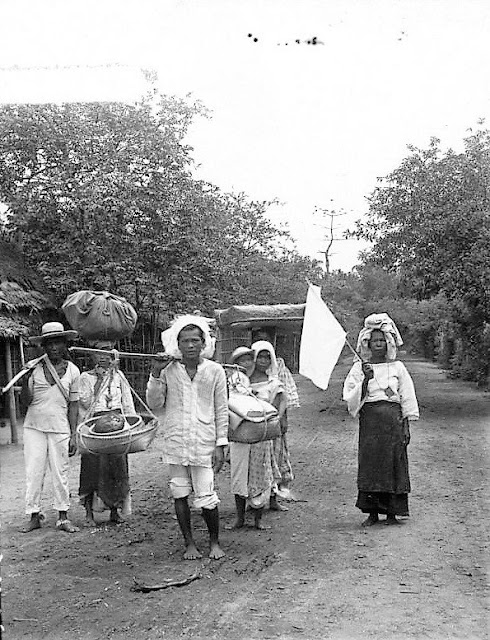
  A Legacy of Resistance --The Enduring Symbol of Our Flag We frequently encounter old photographs depicting Filipinos at the turn of the 20th century, clutching white flags. This era, marked by American control over much of Luzon, saw the indigenous population – young and old alike – under constant suspicion of insurgency. The white flag served as a desperate plea, signifying their noncombatant status and intent to simply go about their daily lives. However, American soldiers subjected them to searches nonetheless. Examining the history of Filipinos and their flags reveals a deep-seated connection. As early as the American arrival in Manila Bay in 1898, the US Expeditionary Force bristled at the sight of Filipinos proudly displaying their national emblem. Reports documented small civilian fleets and bancas adorned with Philippine flags dotting the waters around Manila Bay, prompting the Americans to confiscate many of them. This aversion to national symbols culminated in the passa...

Henchmen of Aguinaldo (Tirador ni Aguinaldo)

Image
  The news material was from a Manila newspaper .1920s. The photo was just superimposed -- With Antonio Abad interviewing Janolino. Can anyone tell the reason for the existence and also the duty of the Kawit detachment, battalion, troop... whatever? Somehow it has a vague order and command. This group of Cavitenos perhaps had only one defined role, being the extra and ultra military exponent of Cavitismo and "Aguinaldismo" -- If I may say. They might have been true patriots at the beginning of the revolution, abled men who were with Aguinaldo during Cavite's glorious run against the Spanish Forces, but what happened to them after politics took its divisive role in the revolution was a different story. We define "henchman" in Tagalog as "tirador or the much blunt version perhaps would be "taga-tumba". The Bonifacio brothers were said to be , one of the first victims of the "tiradors" of Cavitismo. But there was a certain Col. Ignacio Paua...

Carlism and the Philippines

Image
Nobody personifies Carlism better in the Philippines than Carlos Maria de la Torre--Photographed here when he was an officer in the Carlist Army. The Rise and Evolution of Carlism in Spain Carlism emerged as a potent force in 19th-century Spain due to a dynastic crisis within the Bourbon monarchy. It pitted one branch of the family against another, with supporters of Don Carlos, Count of Molina, challenging the legitimacy of Isabella II's claim to the throne. This initial focus on succession morphed into a broader ideological movement. Carlists championed a return to traditional values, advocating for a strong monarchy, Catholicism as the state religion, and fueros (regional privileges) – particularly appealing in areas like the Basque Country. This ideology naturally clashed with the prevailing winds of change. As Spain grappled with economic hardship following the loss of its American colonies, liberals and progressives advocated for reforms, including restrictions on the Church...

Jose Rizal's Cartoon and Potato Humor

Image
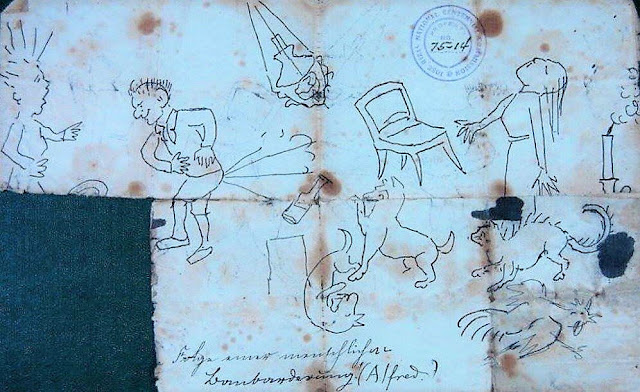
  In his letter to his family, dated 6. February 1886 from Heidelberg, Germany, Jose Rizal describes German life to his family rather candidly: "La vida alemana no es desagradable, solo que está llena de patatas. A cualquier cosa, patatas: por la mañana y por la noche. A la noche se toma té con patatas y carne fría.. Translation: "German life is not unpleasant, it is just full of potatoes. To anything, potatoes: in the morning and at the night. At night tea is taken with potatoes and cold meat." Incidentally, there is one cartoon drawn by Rizal when he was in Germany describing the consequences of an early morning farting of a man named Alfred. Incredibly our national hero used the German term "Bombardierung"(Bombardment) to put the utmost humor into the cartoon where the scene was of funny chaos. Perhaps the result of too many potatoes? By the way, the German word for potato is "Kartoffel". In Swiss-German it is much more fanciful, they call it ...

Medieval Saints Spain Brought to the Philippines

Image
  The Martyrdom Of Saint Sebastian. ca 1472. Staatliche Sammlung. Munich The Waning of the Old Gods and the Rise of the Saints It took millennia for Christianity to supplant the polytheistic Graeco-Roman religion across most of Western Europe. This new faith placed humanity at the center of the cosmos, with a single God intimately connected to human suffering – Jesus Christ, the incarnate son of God, as one branch of the new religion proclaimed. However, this new faith harbored its own form of demigod veneration. Many came to revere "saints," individuals believed to possess divine powers who inspired action, healing, and conversion in the name of Christ. While some saints were early martyrs or key figures in the church's growth, others bore a striking resemblance to the demigods of the Graeco-Roman pantheon. Similar to the ancient Greek city-states, communities and cities throughout Europe venerated saints as patron protectors and benefactors, much like the way Greek myth...

Ang Militarismong Kastila na Bumitay Kay Jose Rizal

Image
  Ang Bilango ng Intramuros --  Bisperas ng Pasko Disyembre 1896 Ika-22 ng Disyembre 1896, ipinalabas ng opisina ng Gobernador General ang ulat na nag dedetalye patungkol sa aktibidades at nakaraan ng bilangong Jose Rizal. Ang ulat ay isinumite naman sa korteng naglilitis sa akusado. Sa nasabing ulat, kapansin-pansin na hindi lamang ang obrang "Noli Me Tangere" at "El Filibusterismo" ang binangit bilang mga pangunahing panulat na ginamit ng nasasakdal upang libakin ang mga prayle at ang pangkalahatang estado ng gobyerno kolonyal ng Espanya sa Piipinas, maging ang kanyang anotasyon sa "Sucesos de las Islas Filipinas" ( ni Antonio Morga) ay sinasabing naghahayag ng mga prinsipyong laban sa simbahang katolika. Nag uudyok sa mamamayan upang mag aklas. Sa bisperas ng Pasko 1896, inilabas din ng Malacanang noon ang mga pangalan ng mga opisyales militar na aaktong bilang mga hukom sa salang sedisyon at rebelyon laban kay Rizal -- mga pangalang na nagmula sa ibat ...

Noli Me Tangere's "Christmas Eve"

Image
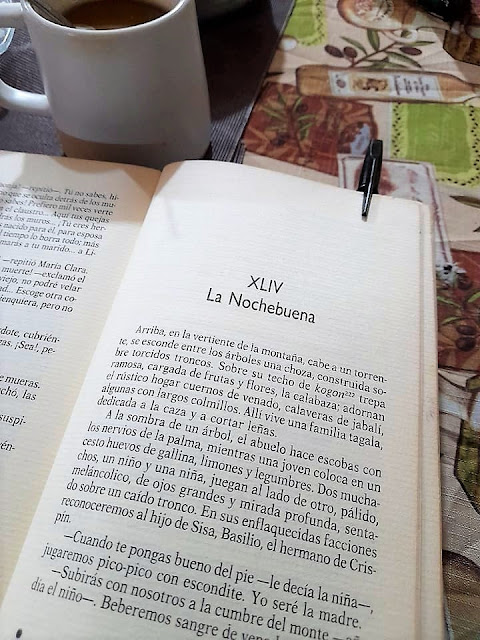
Breakfast And Remembrance. Pasig City. 24. December 2021   Last night, we found ourselves watching a pirated version of the latest Spider-Man movie, No Way Home (sorry, couldn't wait). As the movie wrapped up, the final scenes unfolded with the hero frolicking in the snow—Christmas had come. It struck me: how many unforgettable stories and movies have been set during this magical season? One of the first that comes to mind is Charles Dickens’ timeless tale of the rich yet miserly Ebenezer Scrooge in A Christmas Carol. There’s also E.T.A. Hoffmann's The Nutcracker and the Mouse King, immortalized by Peter Ilyich Tchaikovsky in his ballet The Nutcracker Suite. During high school, we read O. Henry’s short stories, and The Gift of the Magi always stood out as a favorite.  There are movies and stories we often would like to associate with this great time of the year. Jose Rizal has the last chapters of the Noli set in Christmastime, but what Rizal did was to make it quasi tragic, s...