Posts

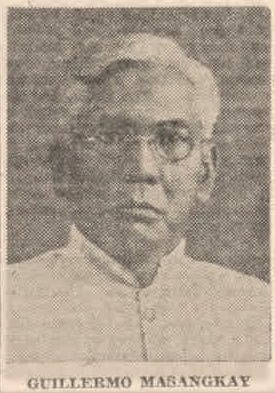
Guillermo Masangkay (1867-1963) "ALAKDAN"
Image
Alakdan In 1935, a group of Manila newspapers undertook a project to find out who was still alive among the original founders and members of the Katipunan Methodically, the said veterans, "Sons of the People" were searched in Manila and the suburbs. Through meticulous research and inquiry, no more than thirty were successfully identified and located. One of those approached to give his opinion to the initiative was none other than Guillermo Masangkay, one of the early members of the Katipunan Guillermo Masangkay found it hard to accept that only 25 of the original founders of Katipunan surfaced. He promptly voiced his disbelief, stating, "It can't be possible that there are 25 original founders of Katipunan who are still alive today as as published in certain section of the Manila press. There are hundreds of the original thousands are living in obscurity who tore up their cedulas in Kangkong where the first cry of rebellion was made. and they are not heard from be...

Katipunan in Mindanao - Restituto Javier - "MAPANGAHAS" (1873- 1936)

Image
Restituto Javier shared a kinship with Supremo Andres Bonifacio, both hailing from Tondo, Manila. A close comrade and confidant of the Supremo, their bond predates the inception of the Katipunan. Much like Bonifacio, Javier was employed at the German firm Fressel & Company, where Bonifacio assumed the role of bodeguero, overseeing the warehouse. However, Javier held the position of an agent (personero) for the company. These circumstances likely paved the way for his early involvement in the ranks of the Katipunan. He adopted the nom de guerre "Mapangahas"." In the wake of Katipunan's attack of Pinaglabanan in 1896, Javier was arrested and s entenced to life imprisonment on charges of sedition and rebellion, he found himself exiled to the distant Penón de la Gomera, Africa—a Spanish military outpost which also served as detention facility for political prisoners and rebels. On this rocky island, Javier toiled alongside fellow inmates, comprising Cuban and Filipin...

Jose Rizal's Christmas Letter to Blumentritt - 24th December 1886

Image
    In his letter to Ferdinand Blumentritt, Jose Rizal shares insights into how Christmas is celebrated in the Philippines. Throughout their friendship and correspondence, Rizal consistently took the time to convey his holiday greetings to the Blumentritt family. What makes this particular letter fascinating is Rizal's mention of the old Teutonic-German tradition of setting up a Christmas Tree, known as the 'Christbaumfest,' which is exclusively practiced in German-speaking regions on Christmas Eve. Rizal admired and embraced this tradition, going so far as to share it with his family back home. In the same letter to Blumentritt, Rizal, perhaps feeling homesick, penned the following description of Christmas in the Philippines: "At home, the entire family comes together for a midnight dinner; the children adorn a Belen with figurines of the Child Jesus, shepherds, animals, and more. This season is the most beautiful and delightful time we have in the Philippines....

Pasig During the Second Word War -- The Need for a Continuing Narrative (Part I)

Image
December 7, 1941 -- Pearl Harbor was attacked by Japan which was then followed by bombings of US bases in the Philippines and the subsequent landings of Japanese troops in Lingayen.-- Because of the International Dateline (IDL), it was December 8. 1941 in Manila -- The Feast of the Immaculate Concepcion. Mass was being celebrated in Pasig Church when the news of the bombing of Hawaii began to spread in the town.  MANOLO LOZADA He arrived at the venue sporting a distinctive Breton hat, a choice that, I must admit, suited him well—not for making him look younger, but for the intrigue it could generate as the "man in a hat." However, to many Pasiguenos of another generation, and to those who recognized the worth of the man, he is "Tito Manolo," the owner and proprietor of the city's oldest "panaderia," known as "Dimas-Alang," an artist-painter, and the brother of the much-celebrated Filipina violinist, the late Carmencita Lozada. Manolo Lozada w...

Artemio Ricarte - "El Vibora"

Image
  He possessed the most lethal-sounding nom de guerre of his generation - El Vibora, the Viper. He once pointed out that he was there, at the early beginnings - the initial pace of the armed struggle. One of the many children of the events of 1872. He was initially associated with the Supremo and Cavite's Magdiwang council. In the attack he led against the Spanish garrison of San Francisco de Malabon (Gen Trias, Cavite), it is said that El Vibora, along with his men, posed as customers in a carenderia, waiting for the ideal time to launch the attack. The symbolism of the carenderia must have held significance for him, as he later named his restaurant-quasi tambayan "Karihan," in his place of exile - Yokohama, Japan. A man of contradictions, was he an "oportunista" or "segurista"? And although he was Ilocano by birth, he is undoubtedly a fine specimen of "cavitismo." This owes to his true loyalty to his adoptive province. He remained ...

Umbrella Academy ni Rizal.

Image
Larawan ng ilan sa mga kilalang miyembro ng noo'y Berliner Anthropologische Gesellschaft (Berlin Anthropological Society). Kuha ito sa kanila taunang "Tagung" or excursion noong 1885. Napansin ko agad na marami sa kanila ay may dalang payong. Prominente sa larawan yung may no.5 sa ulo, hawak ang kanyang payong -- Siya ay walang iba kundi ang pamosong Aleman, siyentipiko at parliamentarian na si Dr. Rudolf Virchow, isang tunay na "Renaissance Man. Sabi nga ehh, Virchow challenged both the authority of the State and Religion. Hinamon daw ito ng duelo mismo ni Otto von Bismarck, dahil napikon ang Bismarck sa batikos ni Virchow tungkol sa isyu ng militarisasyong na nangyayari noon sa sandatahang lakas ng Imperyong Aleman. Ang simbahan Katolika naman ay naging katungali ni Virchow sa isyu ng separation of church and state pati na rin ang kapangyarihan ng sektor ng pang relihiyon lalu na nga ang Katolisismo gamitin ang kanilang pulpito upang batikusin ang inaakala nitong m...

Max Frisch -- Homo Faber

Image
  I'm rereading Max Frisch's most popular opus; Man in control of his being, his technology, and surroundings, as the Latin term defines, "Homo faber". What if your rational "Weltbild" is challenged by a series of events that defies logic? Shall we depend on the use of percentages, statistics, or the truth of numbers? Are there such things as equations of accidents and coincidences? I first encountered Frisch in a discussion (I felt it was a debate) around a table filled with various sweets and cups of brewed coffee. In a dismal Zurich weather, the people around challenged me to give my opinion about the writer, who I only knew then in some magazine articles. A young colleague who prided herself belonging to a family of traditional village cheese makers sarcastically smiled at me, her eyes glowed with schadenfroh glee as if saying to hell with your Third World Literature, having labeled me before as disseminator of the narratives of pain and the displaced de...